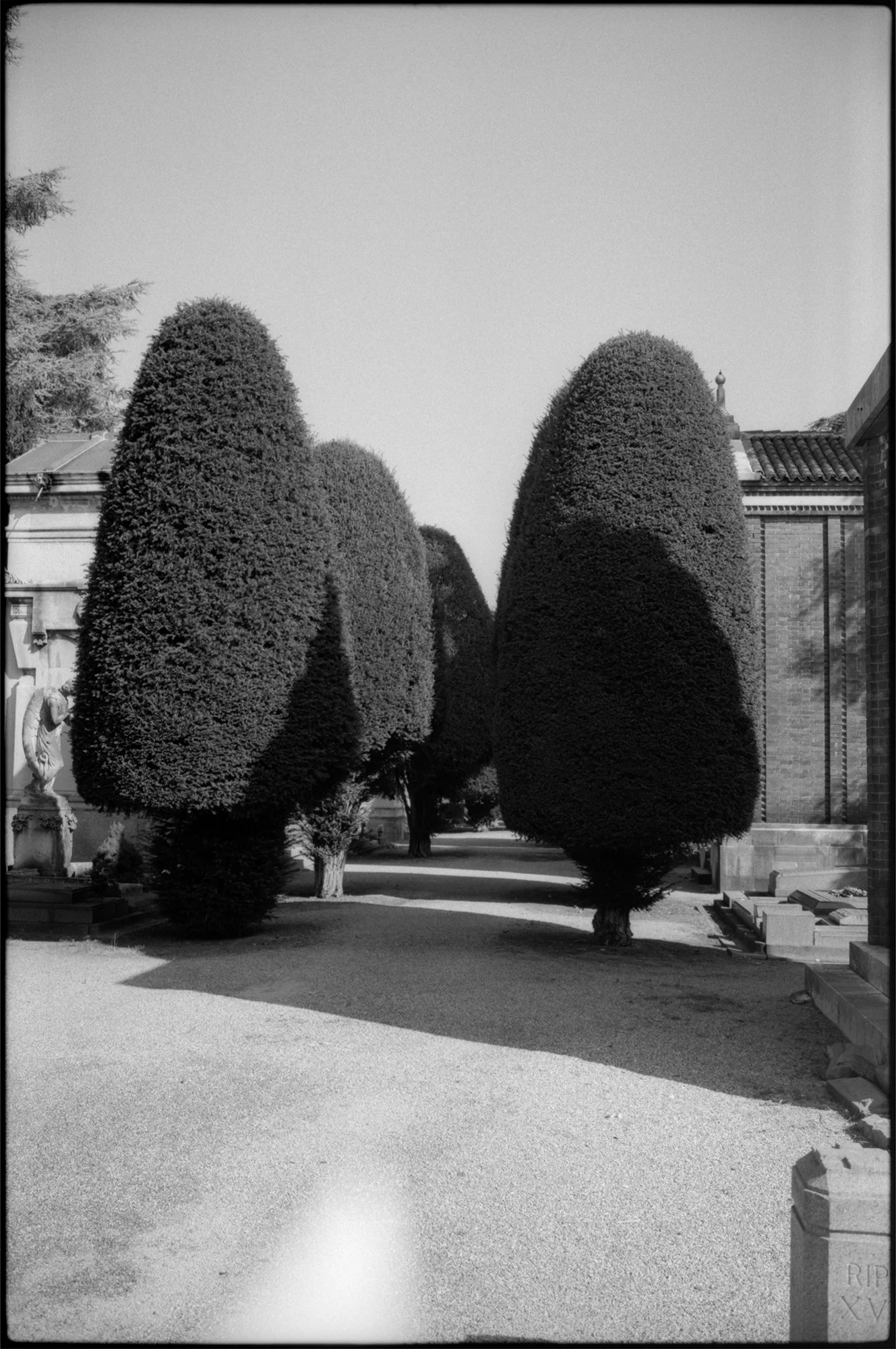
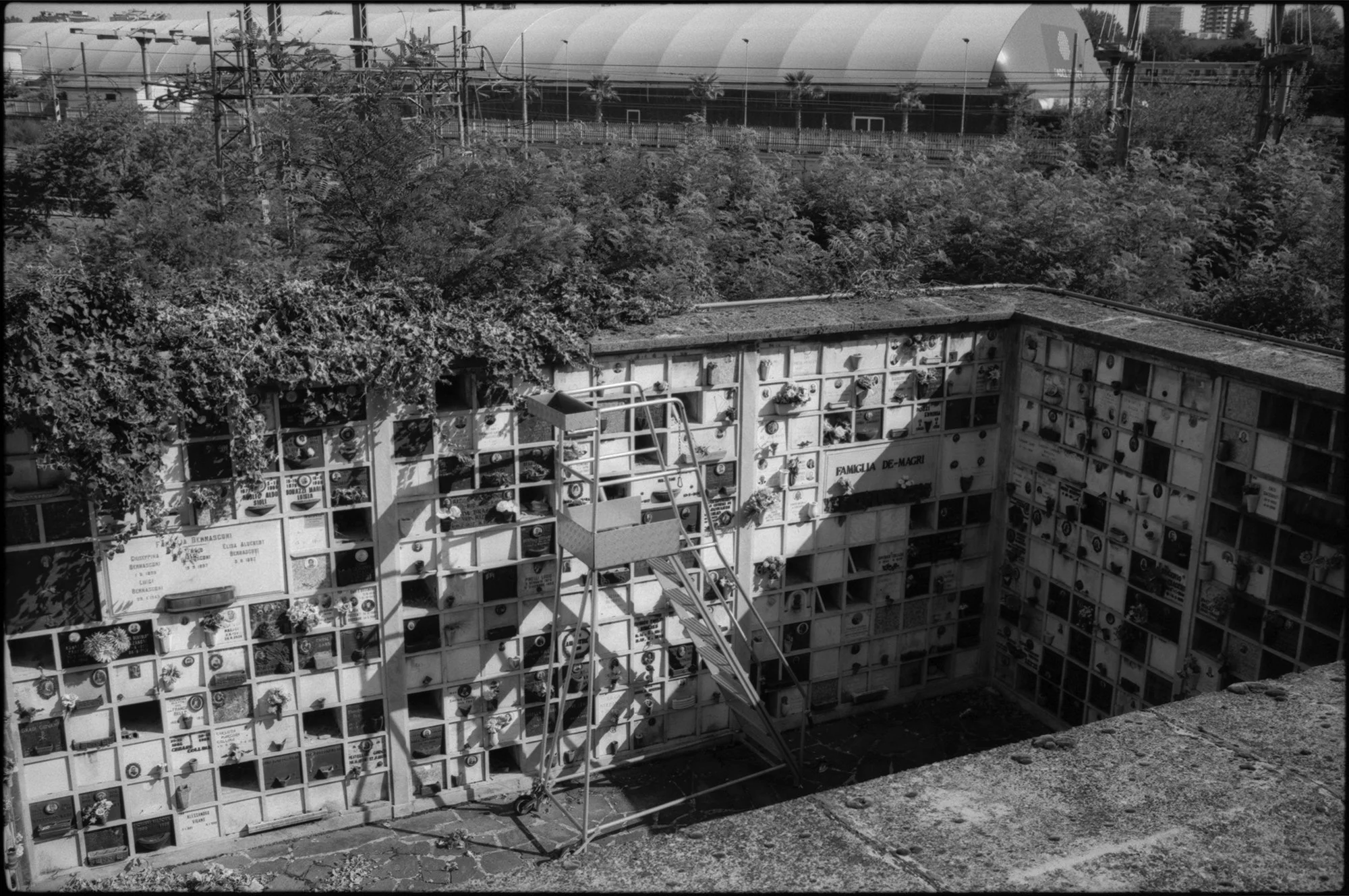
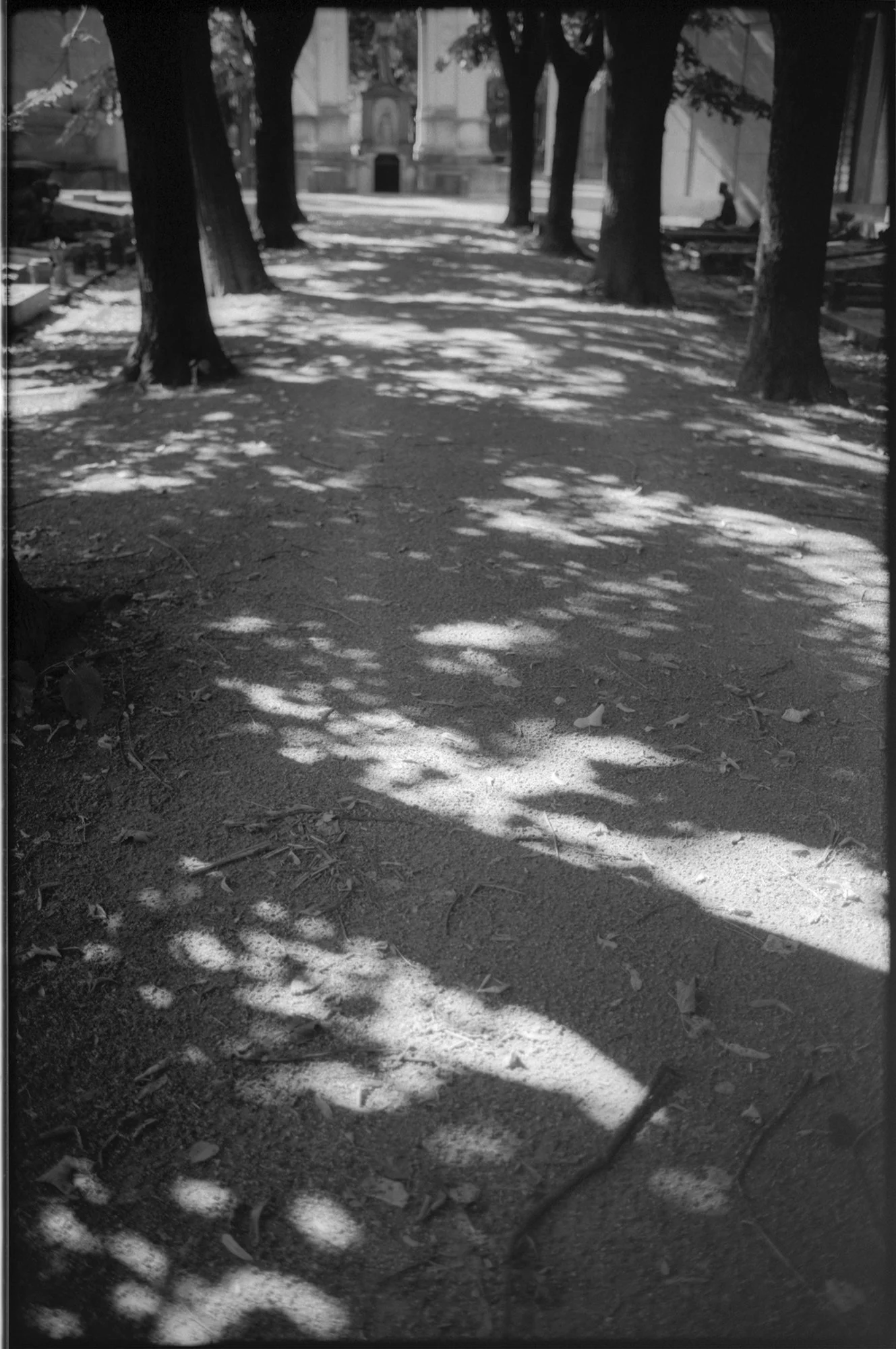
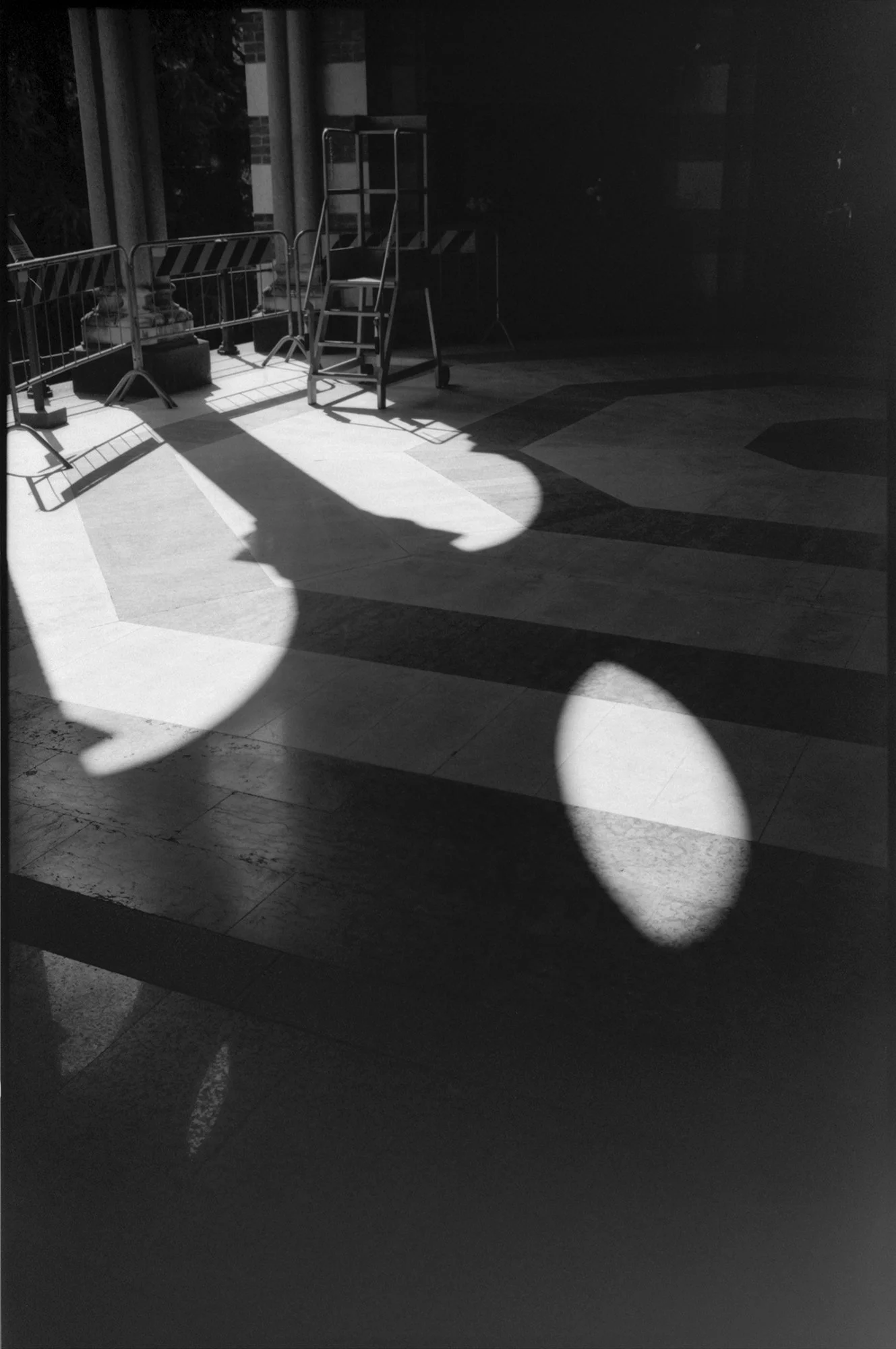
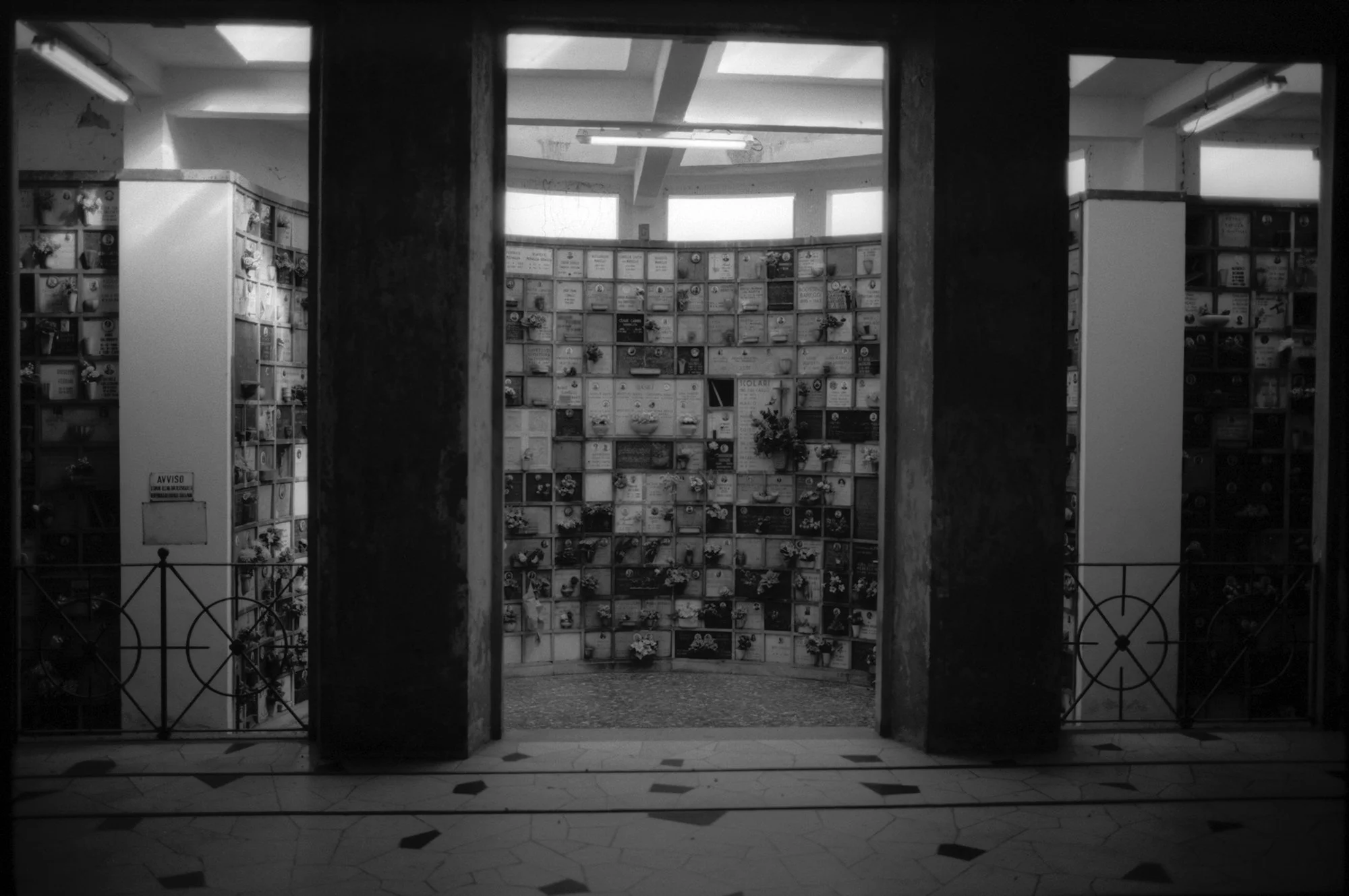
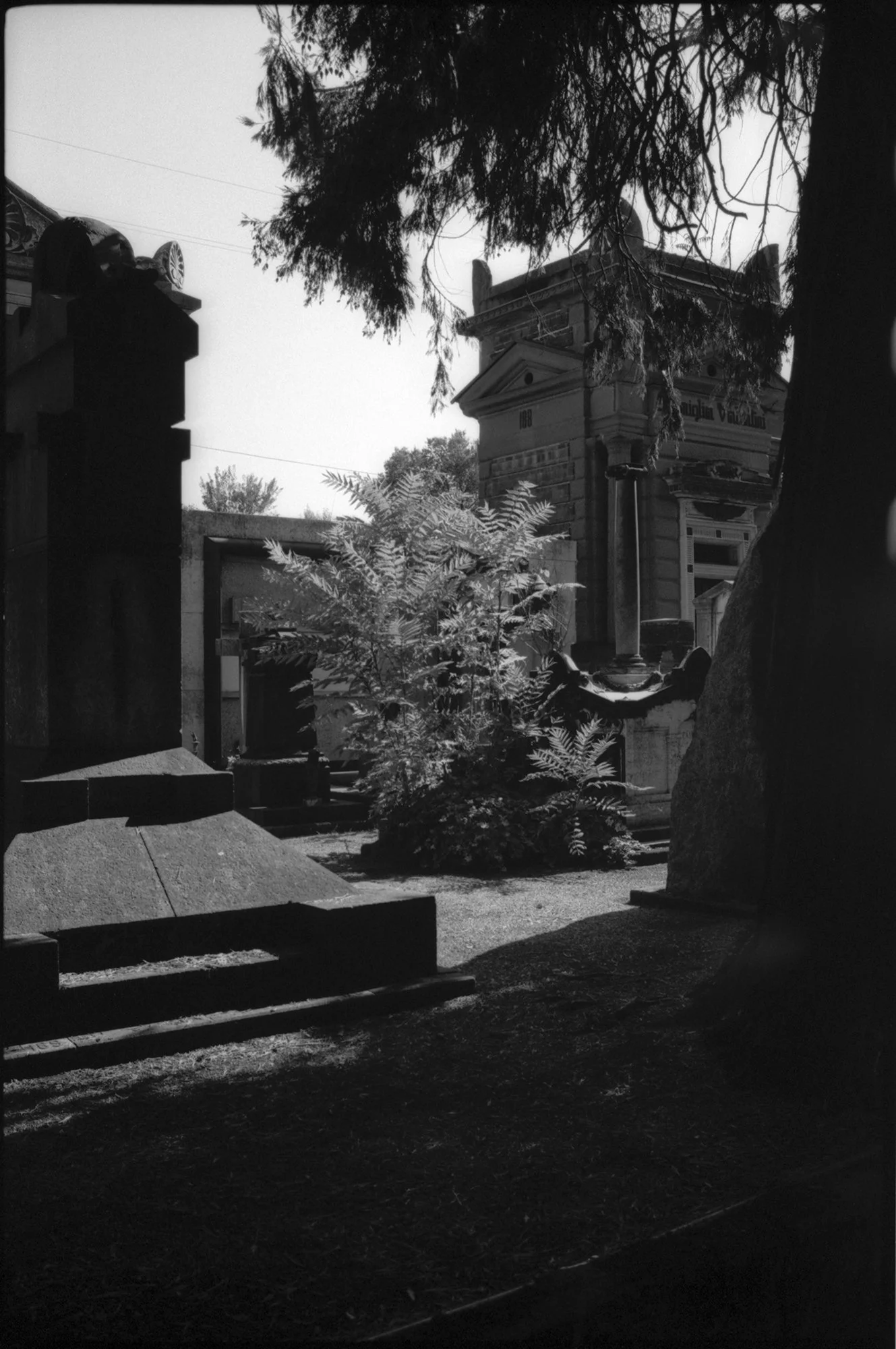
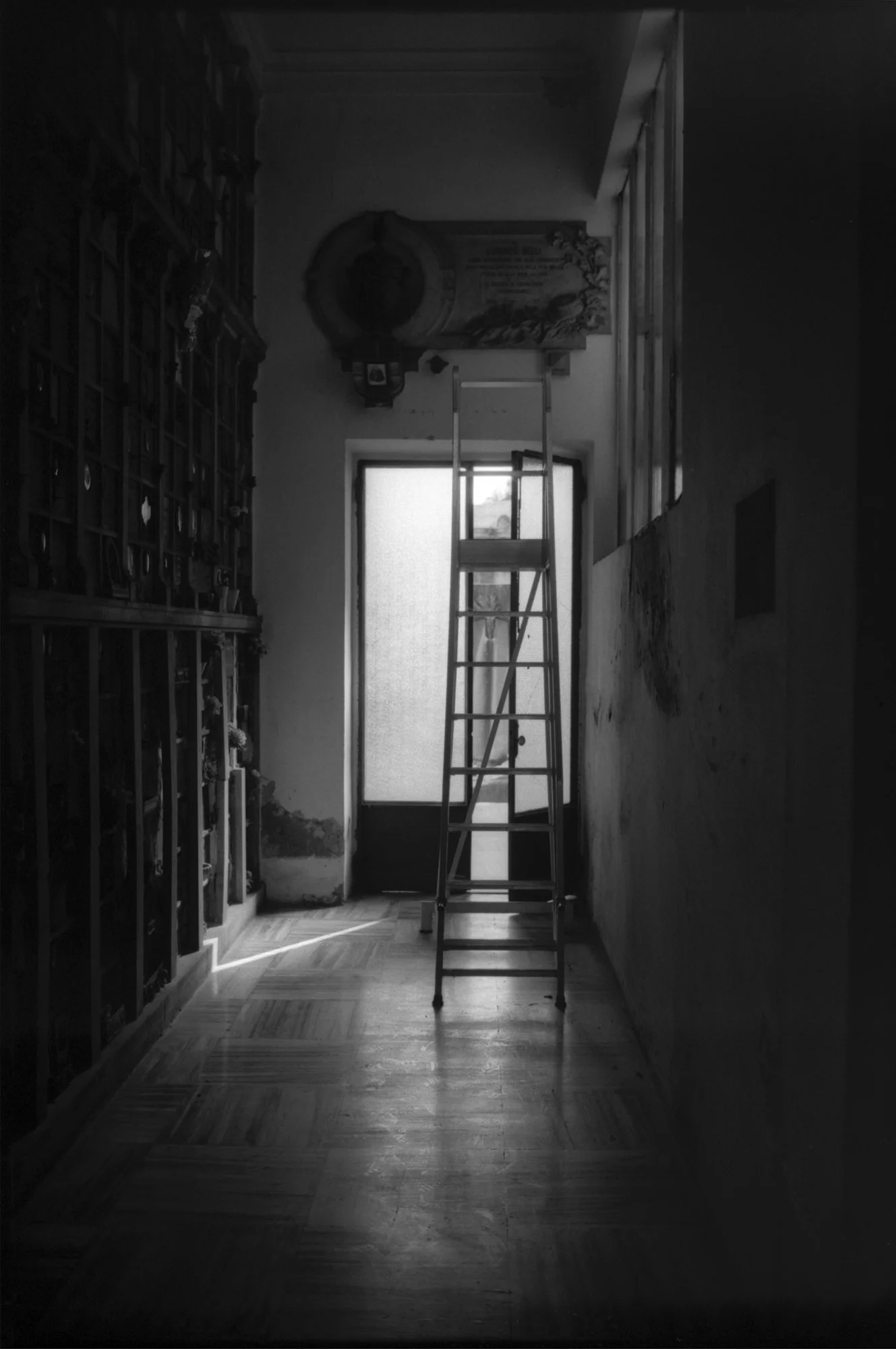
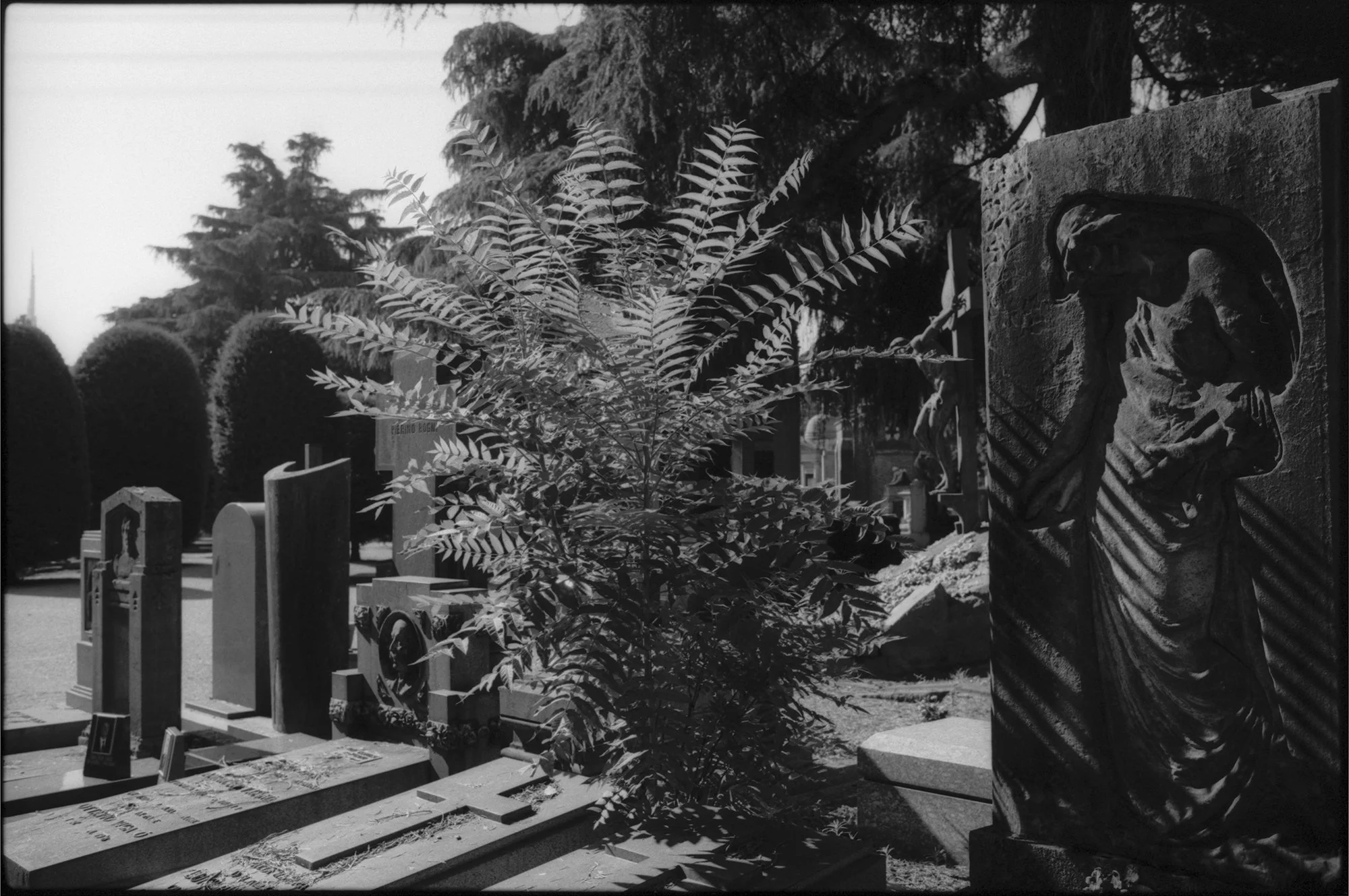
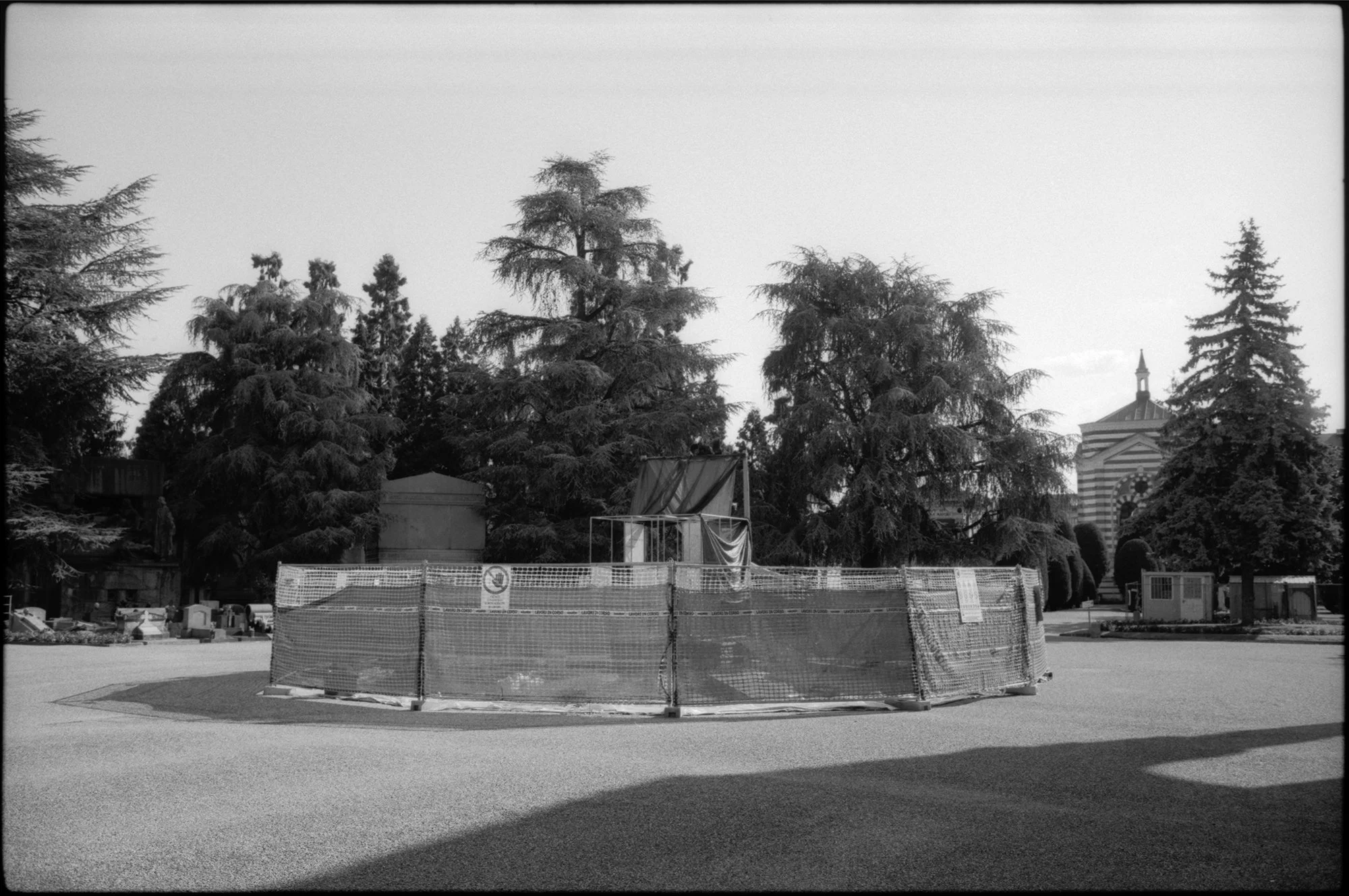
On the morning of the last day in Italy, the heat once again cast everything in a haze. Visiting Cimitero Monumentale di Milano felt, in a way, familiar, because for several years I lived just north of Green-Wood Cemetery in Brooklyn. The eccentric monuments in CMM were similarly interesting, but both more classical as well as more avant-garde than those in Brooklyn, and many seemed to be more actively used.
But there was a certain sadness—not grief—underneath the visuals. Within virtually all of the mausoleum corridors, approximately 40% or maybe even half of the niches had bright orange stickers on them warning that its contents were in arrears. Was the family of the deceased whose remains are at rest in that niche no longer paying their annual or monthly fees? And the cemetery administration will therefore soon “evict” the niche’s contents? Some of the remains had been there only an handful of years. The narratives I could invent to explain this were all sad.
I used to think the idea of my remains being buried in a cemetery and, presumably, staying there forever, was itself sad. Or was the idea of my remains laying there forever just boring? In either case, it sounded undesirable. Wouldn’t it be better to be simply cremated and the ashes scattered somewhere nice; it would be over and done with: no decaying remains in the ground. But, while I was living near Green-Wood, this thought actually changed. It’s nice there, a pleasant walk among trees and pastoral hills, gently ornate monuments and quiet dignity. (During Covid, Green-Wood was, for a time, an almost daily walk for me, as it was convenient and virtually unvisited by others.) I began to think that I would prefer burial in a place like this. People, like myself, come here to have a stroll, maybe a cup of coffee, and get some fresh air. Yes, there’s some sadness to it, of course, but that’s part of its honest character, which I like.
But what if it isn’t “forever”? What if my remains were in arrears?